Plant Calculator
Enter the approximate length and width of the area you will be planting and click 'Calculate' to determine how many Helenium autumnale you will need.
Correct and successful spacing is complex and depends on project conditions. We encourage you to call us at 877-ECO-PLUG for project specific recommendations and further assistance.
Helenium autumnale
common sneezeweed
- Category: Perennial, Native
- Hardiness Zone: 3-8
- Height: 3-5 Feet
- Spread: 3 Feet
- Spacing: 18 Inches
- Bloom Color: Yellow
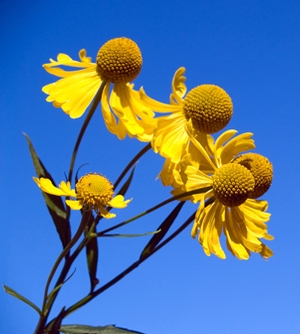
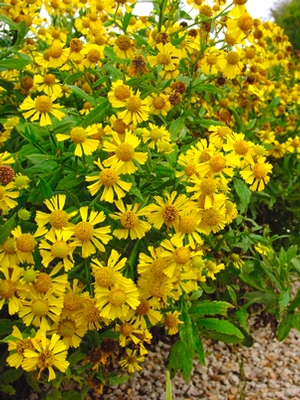
Our local native with yellow or bronze single daisy-like flowers on stout branched stems in late summer. Petals have distinct tooth-like indentations; hence the common name, dog-toothed daisy. All sneezeweeds have three-lobed petals which distiguish them from Rudbeckia and other yellow coneflowers. Brown, rust colored fruit appear in fall. Great for cut flowers and the avid butterfly gardener.
Exposure
| • | Full Sun |
Wetland Indicator Status
| • | Falcutative Wetland (FACW) |
Plug Type
| • | Landscape Plug™ |
Propagation Type
| • | Open pollinated |
Additional Information about Helenium autumnale
Helenium autumnale is our local native with yellow or bronze single daisy-like flowers on stout branched stems in late summer. The petals have distinct tooth-like indentations giving the common name, dog-toothed daisy. All sneezeweeds have three-lobed petals which distinguish them from Rudbeckia and other yellow coneflowers. In the fall, the flowers develop into brown, rust-colored fruit. Sneezeweed is a treat for cut flower arrangements and a must-have for the avid butterfly gardener.
The true distinguishment Helenium autumnale enjoys is that it can be found along almost any moist embankments throughout the continental North America, a truly adaptable native that thrives in sunny, moist open areas along ponds, waterways, and meadows. While other native plants don’t like to sit in wet, heavy clay, sneezeweed finds this to be a preferable condition. In cultivation, sneezeweed can endure periods of drought in the garden after it has been established. To maximize flower potential and to tidy up its appearance, a late spring or early summer pinch is encouraged.
A favorite for pollinators, from beetles to flies to solitary bees to butterflies, Helenium autumnale is perfect to round out a planting design for wet areas such as retention basins, rain gardens, meadows, or the back of the border. Sneezeweed is avoided by deer and rabbits due to its bitter leaves that contain a toxic compound. The plant must be ingested in large quantities but it has been known to make livestock sick.
Growing & Maintenance Tips for Helenium autumnale
Easily grown in rich, moist soils in full sun. Tolerates periods of drought in the garden, but prefers even moisture in production. Fertilize sparingly to reduce risk of weak stems. Plants may benefit from being cut back in early spring to encourage more branching and floriferous growth and tidy habit in containers. Foliage should be cut back after flowering. Best used in borders, meadows and wild gardens.