Our Plants
Welcome to the North Creek plant catalog! Here you will find information on our perennials, grasses, ferns and shrubs. You can view plants by either common or botanical name and sort the list by plant type. Click on a thumbnail image to see detailed information about that particular plant.
If you are looking for just the right plants to grow, use our Plant Search to find plants with particular characteristics.
Note: We endeavor to err on the side of caution when listing zone information. Where noted plants may be hardier than listed.
Achillea 'Fireland'Fireland yarrow
Common yarrow is a carefree garden plant that spreads easily to fill available space. 'Fireland' is a vigorous grower with brick red flowers that fade to deep orange throughout the summer. Named for Tierra del Fuego, the land of fire. Introduced by Ernst Pagels. An excellent cut flower!...
[ More Info ]
|
|
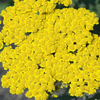
Achillea 'Moonshine'Moonshine yarrow
Silver foliage with 3' tall stems topped with broad sulphur-yellow flower heads. A hybrid of A. x 'Taygeta' and A. clypeolata, introduced by Alan Bloom in the 1950's. An excellent choice for a hot dry site, especially if it's windy. A beautiful cut flower!...
[ More Info ]
|
|
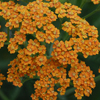
Achillea 'Terracotta'Terracotta yarrow
Another Ernest Pagel introduction, with pronounced silvery foliage. Sturdy stems support bright peach flowers that slowly turn to rich hues of earthy reds and oranges. An excellent cut flower!...
[ More Info ]
|
|
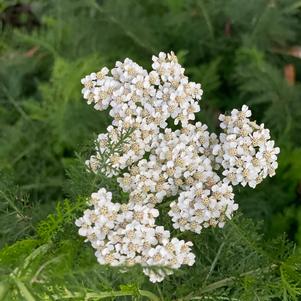
Achillea millefolium 'Oertel's Rose'Oertel's Rose common yarrow
Common yarrow is a carefree garden plant that spreads easily to fill available space. 'Oertel's Rose' is rosy pink with good strong color that is slow to fade. ...[ More Info ]
|
|
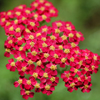
Achillea millefolium 'Paprika'Paprika common yarrow
Intense red flowers surround bright yellow centers. This Achillea is a vigorous grower that will quickly form a dense weed-blocking mat. It is one of the most floriferous of the Achillea cultivars, presenting a solid block of red in early summer. An easy and rewarding production plant, it has very few pest or pathogen problems....
[ More Info ]
|
|
Achillea millefolium 'Paprika'Paprika common yarrow
Intense red flowers surround bright yellow centers. This Achillea is a vigorous grower that will quickly form a dense weed-blocking mat. It is one of the most floriferous of the Achillea cultivars, presenting a solid block of red in early summer. An easy and rewarding production plant, it has very few pest or pathogen problems....
[ More Info ]
|
|
Achillea millefolium 'Summer Wine'Summer Wine common yarrow
Common yarrow is a carefree garden plant that spreads easily to fill available space. 'Summer Wine' is a vigorous grower with deep wine-colored flowers that fade to rose pink throughout the summer. An excellent cut flower!...
[ More Info ]
|
|
Achillea millefolium 'Strawberry Seduction'Strawberry Seduction common yarrow
Rich, strawberry-red flowers are accented by a vivid golden-yellow center, taking on a yellowish cast as they mature. Thick, dark green foliage is fragrant and densely arranged on sturdy stems. Rigid, upright habit, long bloom period and very drought tolerant. A Blooms of Bressingham introduction. ...[ More Info ]
|
|
Achillea millefolium 'Pomegranate'Pomegranate common yarrow
Selected for outstanding compact, sturdy and full habit. 'Pomegranate' is a dependable and carefree perennial with freely flowering, flat-topped, red-purple flowers. Foliage remains clean throughout the gardening season and carries a spicy fragrance. Strong and vigorous growth habit, blooming summer into fall. Exceptional heat tolearance. A Blooms of Bressingham introduction. ...[ More Info ]
|
|
Achillea millefolium 'Wonderful Wampee'Wonderful Wampee common yarrow
Extremely floriferous! Brilliant, bright pink flowers cover the tops of sturdy stems late June into July. Selected for sturdy, compact growth habit and extended bloom period. Foliage has an attractive gray-green cast, finely dissected margins and remains free from disease. Very drought tolerant; cut back to encourage rebloom. A Blooms of Bressingham introduction. ...[ More Info ]
|
|
Acorus americanusSweetflag
Acorus americanus is a hardy perennial swamp or bog plant with sweet, spicy-scented leaves. Spadix like flowers appear in June and July, followed by dark berries. Found at water's edge from Nova Scotia to Virginia to Washington to Alaska. Great for stabilizing pond edges or filling a boggy area....
[ More Info ]
|
|
Actaea pachypoda 'Misty Blue'Misty Blue white baneberry
White baneberry is a striking, multi-stemmed woodland perennial selected for soft, bluish-green, finely cut foliage. Flowers appear in spring, followed by vivid, reddish pedicels which produce large, white ‘doll’s eyes’ fruit in autumn, persisting for 4-6 weeks. Fruit is marked by a distinct black dot. This cultivar was discovered in a planting of unknown origin at Mt. Cuba Center in Greenville, Delaware. Mt. Cuba Center is a non-profit organization committed to promoting and appreciation for plants native to the Piedmont, encouraging their use in gardens and supporting their conservation in nature. Tours, educational programs and plant introductions provide a means for future generations to gain an appreciation of the diversity and landscape potential of plants that comprise the Piedmont flora. ...[ More Info ]
|
|
Adiantum pedatumNorthern maidenhair fern
Dainty bright green fronds are held aloft on shiny black stems creating a light, airy texture in the woodland garden. In rich soil and bright shade it will spread by shallow rhizomes to form a dense groundcover. Found in the humus-rich woodlands and moist woods of Eastern North America. Easy to grow as long as the soil is loose and rich. ...[ More Info ]
|
|
Agastache 'Firebird'Firebird anise hyssop
'Firebird' is a prolific bloomer, covered with deep orange red flowers from mid summer until frost. It is a cross between A. coccinea and A. rupestris, hybridized by Richard Dufresne of North Carolina. An excellent choice for containers, raised beds and rock gardens. A favorite of butterflies and hummingbirds. For us this has been a very reliable returner when given good drainage....
[ More Info ]
|
|
Agastache 'Tutti Frutti'Tutti Frutti hyssop
'Tutti Frutti' has bright lavender pink flowers all summer. A vigorous and trouble-free grower, it is an excellent choice for the middle or back of the border. If it gets consistent moisture, it may reach 5 feet. A favorite of butterflies and hummingbirds. In containers it benefits from one or two early cut backs. A strong bloomer, it will quickly recover from a trim. A. barberi x A. mexicana....
[ More Info ]
|
|
Agastache 'Purple Haze'Purple Haze hyssop
This decidedly hardy Agastache brings a new color palette with its long racemes of smoky blue violet flowers that never seem to stop coming. It remains compact in a container with an early pinch and is in flower from July to frost. It has survived wet and dry, and warm and cold winters in Pennsylvania where it has been in the ground since Spring 2000. Hardiness beyond zone 6 is unknown....
[ More Info ]
|
|
Agastache 'Blue Fortune'Blue Fortune anise hyssop
Selected for its profusion of long lasting, deep violet blue flower spikes, that appear from July to September and fragrant foliage. Prefers average to dry locations, and is a butterfly magnet. Bred (A. foeniculum x A. rugosa) and selected by Gert Fortgens of the Arboretum Trompenberg, in Rotterdam. Agastache 'Blue Fortune' is long flowering, heat and drought tolerant, as well as insect and disease resistant. Blue Fortune is a hybrid of species native to the US and Korea....
[ More Info ]
|
|
Agastache 'Golden Jubilee'Golden Jubilee hyssop
Definately a WOW! plant. Chartruse Coleus-like foliage is incredible on its own, but the blue bottlebrush flowers in mid summer top it off beautifully. Very hardy and will self sow. Benefits from a little shade in production to protect leaf color....
[ More Info ]
|
|
Agastache 'Black Adder'Black Adder hyssop
The second fantastic Agastache given to us by Coen Jansen, Black Adder boasts numerous bottlebrush flowers of vivid blue from mid summer to frost on a compact, rounded plant. It has been hardy for us in the ground and in containers for 5 years now and has proven to be a reliable production plant as well. An early pinch keeps it more compact in pots....
[ More Info ]
|
|
Agastache 'Ava'Ava giant hyssop
A vigorous native hybrid with tall spikes of lightly fragrant, tubular rose-pink flowers. ‘Ava’ begins to blooms in mid- to late summer and keeps flowering for 2 to 3 months attracting hummingbirds to her exceptionally nectar rich flowers. Flowers bloom in whorls on sturdy, erect stems; foliage and flowers have a light herbal scent. After flowering is done in mid-fall, the deep raspberry-red calyxes hold their color until hard frost. Selected by David Salman of High Country Gardens and named after his wife, Ava. ...[ More Info ]
|
|
Agastache foeniculumAnise hyssop, blue giant hyssop
An upright, clump-forming perennial native to parts of the upper Midwest and Great Plains region. Lavender to purple flowers are densely packed along showy, cylindrical, terminal spikes mid to late summer. Medium green, lanceolate foliage remains clean throughout the season and carries a refreshing anise scent, attracting hummingbirds and butterflies. ...[ More Info ]
|
|
Agastache rupestrisRock anise hyssop
Licorice Plant, so nicknamed by Dr. Allan Armitage, of the University of Georgia for the deliciously scented foliage - mmmm - let your customers rub it! Striking warm rosy orange verticillate flowers with silvery foliage sets this plant apart. It is upright, somewhat shrubby and quite cold tolerant. This is an outstanding plant, in flower from June until killing frost. Championed by Panayoti Kelaidis of the Denver Botanic Gardens....
[ More Info ]
|
|
Alchemilla mollis 'Auslese'Auslese lady's mantle
Green to bright chartreuse flowers appear in clusters above scalloped, grey-green foliage late spring through summer. Robust and vigorous, Alchemilla mollis 'Auslese' prefers full sun to part shade and has a wonderfully uniform habit....
[ More Info ]
|
|
Allium cernuumNodding onion
Found on ledges, in dry meadows, gravel, rocky or wooded slopes, this delicate onion has gently nodding pink flowers in late spring. Beautiful in the garden or naturalized in a meadow. Easy, dependable and very drought tolerant once established....
[ More Info ]
|
|
Alstroemeria 'Mauve Majesty'Mauve Majesty Inca lily
Gorgeous mauve to rose pink flowers accented by dark speckling and creamy yellow throat are sure to catch your eye along the perennial border. This clump former native to South America flowers May through frost; sturdy, upright stems average 15 florets per umbel. 'Mauve Majesty' performs best in well-drained, humus-rich soil under full sunlight. Uniform soil temperatures extend bloom period. Produced from the breeding program of Mark Bridgen of Cornell University....
[ More Info ]
|
|
Alstroemeria 'Tangerine Tango'Tangerine Tango Inca lily
An absolutely vibrant array of tangerine colored flowers blanket sturdy, upright stems from May until first frost. A creamy yellow throat and deep speckling accentuate flowers. 'Tangerine Tango' puts on quite a show in well-drained, humus-rich soil under full sunlight. Protect with a layer of mulch in cooler regions as a uniform soil temperature extends bloom period. Another gem from the breeding program of Mark Bridgen of Cornell University, thanks Mark!...
[ More Info ]
|
|
Amsonia 'Blue Ice'Blue Ice bluestar
This long-blooming, compact Amsonia selected from A. tabernaemontana seedlings at White Flower Farm is possibly a hybrid with the taxonomically challenged A. montana or perhaps with the Asian Rhazya orientale. Whatever its parentage, Blue Ice blooms longer and stronger than the species and forms a dense, compact mound of dark green leaves that turn brilliant yellow in the fall. Looks fantastic in a gallon!...
[ More Info ]
|
|
Amsonia ciliata 'Spring Sky'Spring Sky bluestar
Delicate, light-blue flowers are borne in terminal clusters and held well above the foliage, blooming mid spring atop sturdy, erect stems. Flowers are larger, more prominent, fully opened & last longer than the straight species. A clump forming perennial with finely textured, clean green foliage. Cooler temperatures coax leaves into a golden-yellow to bronze cast. Discovered at the Henry Foundation in Philadelphia, PA. ...[ More Info ]
|
|
Amsonia hubrichtiiThreadleaf bluestar
A graceful and long lived native plant with very fine foliage, clusters of steel blue flowers in May and June on an upright, bushy plant. Excellent golden fall color. Thrives in full sun or part shade. No insect or pest problems with these babies. Found in Arkansas in 1942 by Leslie Hubricht....
[ More Info ]
|
|
Amsonia tabernaemontana var. salicifoliaEastern bluestar
This long-lived, clump-forming, herbaceous perennial features three to four weeks of light blue, star-shaped flowers in spring. Terminal flower clusters are succeeded by ornamental seed pods. Narrow, willow-shaped foliage transitions from green into attractive shades of yellow in fall. An easy to grow, no fuss native perfectly suited for the perennial border. Beautiful when used en masse along the perennial border or in a fresh cut arrangement. ...[ More Info ]
|
|
Andropogon gerardiiBig bluestem
The king of native grasses, Big Bluestem has handsome gray to blue-green stems in spring turning to green alternating with deep red in summer then to coppery red in fall. Three fingered seed heads top tall stems in August. Clump forming with excellent drought tolerance once established. Andropogon gerardii can be found in moist meadows and along side roads and rivers from Canada to Mexico....
[ More Info ]
|
|
Andropogon glomeratusBushy beardgrass
Flowers emerge in September, enclosed in densely clustered bushy bracts atop stiffly upright stems. Green summer foliage transitions to an attractive copper-orange in autumn. Happiest in wet conditions such as bogs, marshes, swamps, swales and other low, moist ground. Multiple seasons of interest; use in cut flower arrangements. ...[ More Info ]
|
|
Andropogon virginicusBroomsedge
An easy-to-grow clump forming native warm season grass with incredible golden copper fall color. A pioneer soil stabilizing plant that does well in poor, infertile areas and surprisingly in floodplains. It's wonderful for xeriscaping, in coastal areas, fall and winter cut stems and restoration. ...[ More Info ]
|
|
Anemone canadensisMeadow anemone
A strong growing plant that needs room to move. Clear white single flowers top out at 18" from mid spring to early summer. A robust and competitive plant that brightens up woodland edges and shady corners of the garden. Combines well with other spring-blooming perennials such as Polemonium, Sisyrinchium and Mertensia....
[ More Info ]
|
|
Anemone sylvestrisSnowdrop anemone
Delicate nodding white flowers bloom early to mid spring atop lustrous dense, green foliage. A low maintenance groundcover for bright shade! Easy to grow in containers, overwinters well in cold frames if protected from heavy rain and snow melt. ...[ More Info ]
|
|
Aquilegia 'Biedermeier'Hybrid columbine
A graceful, old fashioned diminuative perennial with flowers in shades of pink, purple, light blue and white. Aquilegia is best planted where the fading leaves will be camouflaged by foliage of later emerging plants such as Heuchera, woodland Asters or ferns. It is beautiful when naturalized in a woodland setting and will self sow freely when happy....
[ More Info ]
|
|
Aquilegia canadensis 'Little Lanterns'Little Lanterns Canadian columbine
Replacing Canyon Vista as our compact red-stemmed selection, Little Lanterns is short in stature, but free with flowers. Numerous pendant flowers in shades of red and yellow cover the plant in late spring. This selection resolves a few grievances that some have expressed about Aquilegia canadensis by having consistantly shorter stature and more intense color than the species....
[ More Info ]
|
|
Aquilegia canadensis 'Corbett'Corbett yellow wild columbine
Profuse show of butter yellow lantern flowers from April to May. Its short stature, delicate color and mid spring bloom time make it an ideal companion for spring bulbs! Spotted by Richard Simon of Bluemont Nurseries, Monkton, MD. Named for the nearby small town of Corbett....
[ More Info ]
|
|
Aquilegia canadensisWild columbine
Red flowers with yellow centers hang like drifts of softly illuminated lanterns in April and May. Excellent as a shady rock garden naturalizer, it also is quite content in average garden conditions. Occurs naturally in rich rocky woods, north-facing slopes, cliffs, ledges, pastures, and roadside banks. Native to all states east of the Rockies, but not found in Louisiana....
[ More Info ]
|
|
Aruncus dioicusGoats beard
Aruncus dioicus is a fantastic native with large, fine textured feathery blooms in late Spring. Though closely related to Spiraea, Goat's Beard more closely resembles a giant Astilbe. When happy Aruncus can be a formidable garden plant, reaching a spread of 6 feet or more. It is lovely when used at woods edge and it can provide a dense screen beneath a high canopy....
[ More Info ]
|
|
Asarum canadenseWild ginger
An attractive native groundcover for moist shade, wild ginger spreads slowly via underground rhizomes. Lustrous dark green, kidney-shaped foliage usually obscure the unique brown jug-like flowers. Will naturalize, incorporate into a native plant garden or woodland display. ...[ More Info ]
|
|
Asclepias curassavicaBloodflower
Asclepias curassavica is a tender perennial that grows upright and tall with spiraling lanceolate leaves. The flowers, in small scarlet red and orange umbels, are very bright and showy, and wonderful at attracting Monarch butterflies. Blood Flower is a milkweed and thus contains a milky sap that exudes from the foliage when cut or damaged....
[ More Info ]
|
|
Asclepias incarnata 'Ice Ballet'Ice Ballet white swamp milkweed
A marvelous long-blooming, bright white selection of swamp milkweed. Clear white flowers and dark green foliage make the colors of the hundreds of visiting butterflies glisten in the sunlight....
[ More Info ]
|
|
Asclepias incarnataSwamp milkweed
One of the most beautiful of native perennials with clusters of upturned pink flowers in June and July. Much underused in average garden conditions! Attracts butterflies of all kinds. Willow-like leaves are 4-5" long. Occurs in floodplains and wet meadows. ...[ More Info ]
|
|
Asclepias purpurascensPurple milkweed
An exceptionally lovely native that is all too rare in cultivation, purple milkweed has intense rose pink flowers for several weeks in early to mid summer, followed by the attractive pods of silky seeds typical of the genus. Very tolerant of a wide variety of soils and light levels, it is easy to grow. Tolerates shade, but blooms better in the sun. Found from New Hampshire to North Carolina, west to Minnesota and Arkansas. [ More Info ]
|
|
Asclepias syriacaCommon milkweed
This native classic is best known as a food of larval monarch butterflies (along with its siblings A. incarnata and A. tuberosa). Robust and stoloniferous with deep pink clusters of fragrant flowers in June and July, followed by lovely pods of silky seeds in October. ...[ More Info ]
|
|
Asclepias tuberosaButterfly weed
A tough, drought-tolerant native with intense orange flowers in mid to late summer. Attracts many varieties of butterfly and is especially attractive to Monarchs. A beautiful solution for a dry sunny slope! Occurs in dry fields and roadsides in most of the US....
[ More Info ]
|
|
Asclepias verticillataHorsetail milkweed
A widely adaptable and tough native is a deer-resistant food for larval butterflies. The fine-textured foliage provides a dark green backdrop for the clusters of white flowers that appear in June and July....
[ More Info ]
|
|
Aster 'Wood's Light Blue'Wood's Light Blue aster
This member of the Wood's Aster group has the typical low rounded habit and profuse blooming associated with all three. 'Wood's Blue' has perfectly clean foliage, and in the early fall it is covered with clear medium blue flowers with gold centers. Bred for compact habit, long bloom period and heavy flowering, all of the Woods Asters are outstanding pot crops and should be used far more often as a sturdy perennial alternative for mums....
[ More Info ]
|
|
Aster 'Wood's Pink'Wood's Pink aster
Aster Wood's Pink is virtually mildew and rust free. Like all the Wood's Asters, it is a wonderful container plant, with a compact habit and unstoppable clear pink flowers with gold centers. Bred for compact habit, long bloom period and heavy flowering, all of the Woods Asters are outstanding pot crops and should be used far more often as a sturdy perennial alternative for mums....
[ More Info ]
|
|
Aster 'Wood's Purple'Wood's Purple aster
Aster 'Wood's Purple' has perfectly clean foliage, and is loaded with single, clear purple flowers in late summer and early fall. It is slightly earlier than 'Wood's Blue'. Bred for compact habit, long bloom period and heavy flowering, all of the Woods Asters are outstanding pot crops and should be used far more often as a sturdy perennial alternative for mums....
[ More Info ]
|
|
Aster cordifoliusBlue wood aster
Clouds of blue flowers in early fall in shade! A great nuturalizer under trees, at the edge of woods, or as a filler among Hostas and Astilbes, which look pretty rough by September. Found in woods and dry meadows....
[ More Info ]
|
|
Aster cordifolius 'Avondale'Avondale blue wood aster
This selection of the native Wood Aster is a prolific bloomer and carpets the shade garden with light blue in early fall, when little else blooms and the hostas are in decline. A quick and easy pot crop for fall sales. Beautiful and long-lasting as a filler in autumn flower arrangements!...
[ More Info ]
|
|
Aster divaricatus 'Eastern Star'Eastern Star white wood aster
We have grown this select form anonymously for many years and have deemed it worthy of a name. It is shorter than the species and has deep dark shining mahogany stems. It came our way from Canyon Creek Nursery, via Roger Rache, then of the Berkley Botanic Gardens's Eastern US section. Originally collected from coastal Rhode Island....
[ More Info ]
|
|
Aster divaricatusWhite wood aster
Produces a fairtland of glistening of small white daisies in September and October. Lovley naturalized in shade, average, and dry soil. Found in deciduous woods and along roadsieds of the Eastern US....
[ More Info ]
|
|
Aster ericoides 'Snow Flurry'Snow Flurry heath aster
A very low dense carpeting groundcover that is smothered with 1/2" single white flowers with gold centers in September. A good strong grower and a totally new look and use for Asters! Makes an excellent container plant....
[ More Info ]
|
|
Aster laevis 'Bluebird'Bluebird smooth aster
'Bluebird' is a superlative selection of the native Smooth Aster introduced by Dr. Richard Lighty of the Mt.Cuba Center. This tall vased-shaped wildflower has large 1" diameter blue flowers held in cloud-like clusters at the tips of the arching branches. You can pinch back the young shoots in June for denser habit and more flowers, but it is not essential. Staking is helpful by late summer if you forget to pinch. Perfectly clean foliage makes for easy maintenance in production and in the landscape. Aster laevis is a great source of nectar for migrating monarchs and other late season butterflies....
[ More Info ]
|
|
Aster lateriflorus 'Lady in Black'Lady in Black calico aster
Who can resist plants with great names? Aster 'Lady in Black' is an elegant 3-4' mound of purplish- black strappy leaves smothered in red-centered tiny white daisies in late summer and early fall. A stronger, more statuesque sister of Aster 'Prince' that will thrive in average soil in sun or part shade, but shows best foliage coloration in full sun. Thousands of flowers per plant - a butterfly's dream!...
[ More Info ]
|
|
Aster novae-angliae 'Alma Pötschke'Alma Pötschke New England aster
Bright rose pink flowers in early fall, September for us here in Pennsylvania....
[ More Info ]
|
|
Aster novae-angliae 'Purple Dome'Purple Dome New England aster
A naturally compact form with deep purple flowers in August and September. Eye-popping with Solidago 'Golden Fleece'. One of the most garden-worthy native selections out there. A fine introduction from the Mt. Cuba Center. ...[ More Info ]
|
|
Aster novae-angliaeNew England aster
Tall and majestic, New England Aster rules the prairie in autumn. The deep blue to purple, and sometimes pink flowers are highlights of the late season wildflower garden. Blooms late into the fall, well after the first frosts. This is a critical late season nectar source for butterflies, especially for Monarchs, as they stock up for their long migration to Mexico.- Prarie Nursery...
[ More Info ]
|
|
Aster novae-angliae 'Vibrant Dome'Vibrant Dome New England aster
Vibrant, hot-pink, star-shaped flowers with yellow center accents adorn lance-shaped green foliage through autumn. The compact, mounding habit of this sport of Aster 'Purple Dome' has proven mildew resistance. Reaching between 15 and 20 inches, A. 'Vibrant Dome' performs best in fertile, well-drained soil in full sun to part shade. A beautiful performer for late season color....
[ More Info ]
|
|
Aster novi-belgiiNew York aster
Local midatlantic native of moist to wet meadows. Flowers in shades of blue and purple in early fall, which is late August and early September here in PA....
[ More Info ]
|
|
Aster oblongifolius 'October Skies'October Skies aromatic aster
Shorter, bushier, bluer sister of 'Raydon's Favorite'. A strong growing low mound of bushy foliage covered in lavender blue flowers in mid fall. Highly tolerant of drought and poor soils. This Primrose Path introduction has excellent groundcover potential....
[ More Info ]
|
|
Aster oblongifolius 'Raydon's Favorite'Raydon's Favorite aromatic aster
Medium blue, fine textured single ray flowers in September and October,
aromatic foliage. Irresistable, a really tremendous plant. Introduced by
Holbrook Farm....
[ More Info ]
|
|
Aster tataricus 'Jindai'Jindai Tatarian daisy
Large leaves (to 2') emerge in the spring and provide a bold backdrop for earlier blooming perennials. In the fall numerous flower stalks rise to 4 or 5 feet and each is covered with 1" sky blue daisy-like flowers. Flowering is later than many other asters and this species often provides brilliant color until frost. Found by Rick Darke and Skip March at the Jin Dai Botanical Garden. This cultivar is shorter than the species and less likely to require staking. ...[ More Info ]
|
|
Aster x frikartii 'Mönch'Frikart's aster
Elegant, cool lavender-blue single flowers with gold centers occur on upright, freely branching stems. It blooms earlier than most asters, starting in early August. A tremendous performer!...
[ More Info ]
|
|
Asteromea mongolicaJapanese aster
Tough and easy to grow, this enchanting aster cousin is covered in hundreds of double white flowers from mid-summer to frost. Undemanding by nature, it is ideal for most any sunny garden spot and is a great container plant. Fantastic flower in arrangements too, easier to grow and lasts longer than Baby's Breath....
[ More Info ]
|
|
Athyrium 'Branford Rambler'Branford Rambler running lady fern
This is a good, frisky new fern from John Mickel of Bradford, CT. It has been billed as a running painted fern, but we have found it to be mostly green with red tones along the stem. Even so, it is a lovely and vigorous plant with delicate bright green fronds; a lively groundcover that is very easy to grow and not at all fussy; a deciduous, noninvasive creeper that fills in quickly, but doesn't take over. Hybridized by the legendary Nick Nicou, of Branford, CT....
[ More Info ]
|
|
Athyrium 'Ghost'Ghost fern
From the garden of Virginia's Nancy Swell comes this stunning Lady Fern with silver-white fronds and a decidedly upright habit. Leaves age to light green with new fronds appearing throughout the season. Upright with a beautiful formal appearance that really stands out in the shady garden. This fern really prefers shade and will stand up with all fronds perpendicular to the ground in full sun....
[ More Info ]
|
|
Athyrium filix-feminaLady fern
Handsome crowns of feathery fronds are typical of this genus. Delicate and lacy with arching fronds and dark red stems at maturity. Strong-growing and dependable, the Lady Ferns are great garden plants. Tough and easy to grow, this beauty is the right choice for perennial borders and woodlands alike. A breathtaking flush of new fronds appears in the spring, with new leaves appearing throughout the season for a continuously fresh look. Found in swamps, thickets and damp woods east of the Rockies....
[ More Info ]
|
|
Athyrium filix-femina 'Lady in Red'Lady in Red lady fern
Strong-growing and dependable, the Lady Ferns are great garden plants. This selection from the New England Wildflower Society features red stems, making it a great choice to combine with purple-leaved plants. Tough and easy to grow, this sultry beauty is the right choice for perennial borders and woodlands alike. A breathtaking flush of new fronds appears in the spring, with new leaves appearing throughout the season for a continuously fresh look....
[ More Info ]
|
|
Athyrium filix-femina 'Victoriae'Victoria lady fern
"This is the most spectacular of all cultivars in its magnificent frond architecture. It is really the Queen of Green", according to Dr. John Mickel former curator of ferns at the New York Botanical Garden and author of "Ferns for American Gardens". As with other forms of lady ferns there is so much variability with spore production that it is necessary to produce this form in tissue culture, so its clones are identical to the parent. This superb selection has fronds whose pinnae (leaflets) crisscross to form x's and has crested pinnae tips. Another superior cultivar in the Mickel Collection ™....
[ More Info ]
|
|
Athyrium niponicum 'Pictum'Pictum Japanese painted fern
The most colorful fern around with subtle shades of green, purple and red on a grey-blue background. The color is more intense with some direct sun, preferably morning or late afternoon. Strong-growing and dependable, the Lady Ferns are great garden plants. Native to China, Korea and Japan....
[ More Info ]
|
|
Athyrium niponicum 'Regal Red'Regal Red Japanese painted fern
Handsome and ruffled, this high-color selection has been a much requested Japanese Painted Fern. The dark violet red interior of each 'Regal Red' frond is contrasted by bright silver edges making each leaflet distinct and creating an overall tapestry effect. The pinnules also twist a little giving the frond a "fluffed" up look. 'Regal Red' combines beautifully with red-purple Heucheras such as 'Plum Pudding' and blue sedges like Carex platyphylla or C. 'Blue Zinger'. The fronds work well in cut flower arrangements, providing lasting color and soft texture. Unique and beautiful!...
[ More Info ]
|
|