Additional Information about Iris versicolor 'Purple Flame'
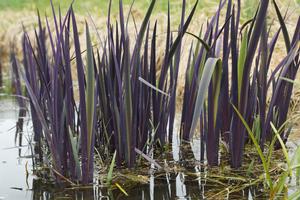
We’re fortunate to have the splendor and garden grace of Mt. Cuba Center in our backyard. We’re even more fortunate to be sharing their new selection of Iris versicolor with the trade—welcome Iris ‘Purple Flame’. Discovered by a staff gardener along a pond edge on-property—this drumroll worthy selection marches to its own beat as it vibrantly announces the return of spring. An extraordinary performer in Mt. Cuba’s gardens (and our trial evaluations as well!), we’ve been awed by the lasting impression of ‘Purple Flame’. Plant along the water's edge, where roots receive consistent moisture to achieve best early season color before foliage slowly transition to green.
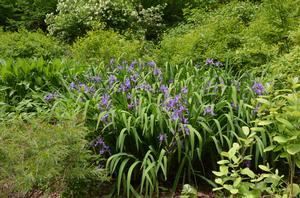
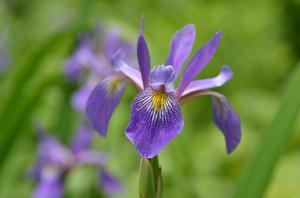
Perfectly at home along a streambank or the edge of a pond, Iris versicolor grows in clumps 1’-3’ tall and 2’ wide. The flowers bloom in early summer from deep violet to white with yellow blotches on the throat. The petals and sepals spread to form an easy feeding vessel for hummingbirds. When the blooms of summer fade, the upright, sword-like foliage provides textural contrast to the garden plants surrounding it. A durable choice, Iris versicolor is perfect for adding a bit of lushness around a water feature or placing in a situation of moist sun where the soil is too wet and heavy for other perennials.
The native range for blueflag runs from Newfoundland to Manitoba, south to Florida and Arkansas and it can be found in marshes, swamps, wet meadows, shorelines, and in forested wetlands. I. versicolor prefers rich soils in full sun to part shade and tolerates moderately brackish water and permanent inundation up to 6 inches deep.
While the flower has some beetle and bird visitors, blueflag’s roots are a preferred carbohydrate source for aquatic rodents. It is a plant best grouped together en masse where the dotting of its blue flowers can create a rhythm as it peaks through the strong foliage. Over time, Iris versicolor spreads by rhizome or by seed if placed in a happy location.
BONAP Map