Additional Information about Sorghastrum nutans
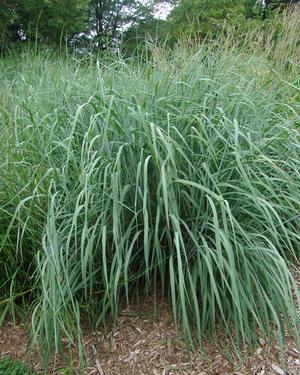
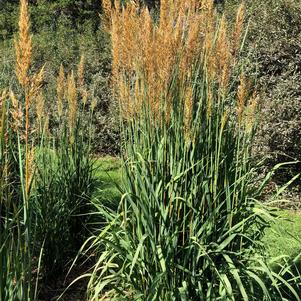
Sorghastrum nutans is a vigorous native warm-season, clump-forming grass growing 3-8’ tall and 1-2’ wide with bluish green foliage turning a translucent yellow-deep gold fall color and bearing beautiful panicles of copper. In the early summer, the height stays around 3’ high, but the plant sends up tall panicles of flowers that turn into golden seedheads. One of the four dominant warm-season grasses found in a tallgrass prairie with Schizachyrium scoparium, Andropogon gerardii, and Panicum virgatum; Sorghastrum nutans works well as an accent in landscapes, especially when substituting North American native species over exotic ornamental grasses such as Miscanthus, fountain grass, or pampas grass.
Yellow prairie grass is adaptable to a wide range of soils, but prefers rich, silty-loams in full sun. It is tolerant of drought, cold, acidity, salinity, and heavy clay soils. Ranging from Quebec and Maine to Manitoba and south to Florida and Arizona and further south still to the Chiapas in Mexico, Sorghastrum nutans can be found in prairies, open woods, fields, and dry slopes. This plant self-seeds readily and in highly-managed landscapes, a cut back after flowering reduces spread by seed. It is an essential component in most North American grasslands and performs best when intermixed with native cool season and warm-season grasses and assertive wildflowers. Yellow prairie grass is very competitive and will easily create a dense monoculture if comparably assertive species are not interplanted.
Sorghastrum nutans is a larval host plant of the specialist pollinator Pepper-and-Salt skipper butterfly and several grasshoppers and leafhopper species. When it is in active growth, yellow prairie grass makes a nutritious pasture grass rich in protein and vitamin A, making it wonderful for bison and cattle. The tall seed heads and dense clumps allow a private nesting area for many prairie-dwelling birds Ring-necked pheasant and Mourning dove.
BONAP Map