
Plant Calculator
Enter the approximate length and width of the area you will be planting and click 'Calculate' to determine how many Chasmanthium latifolium you will need.
Correct and successful spacing is complex and depends on project conditions. We encourage you to call us at 877-ECO-PLUG for project specific recommendations and further assistance.
Chasmanthium latifolium
northern sea oats
- Category: Grass, Native
- Hardiness Zone: 5-8
- Height: 3 Feet
- Spread: 2-3 Feet
- Spacing: 12 Inches
- Bloom Color: Green
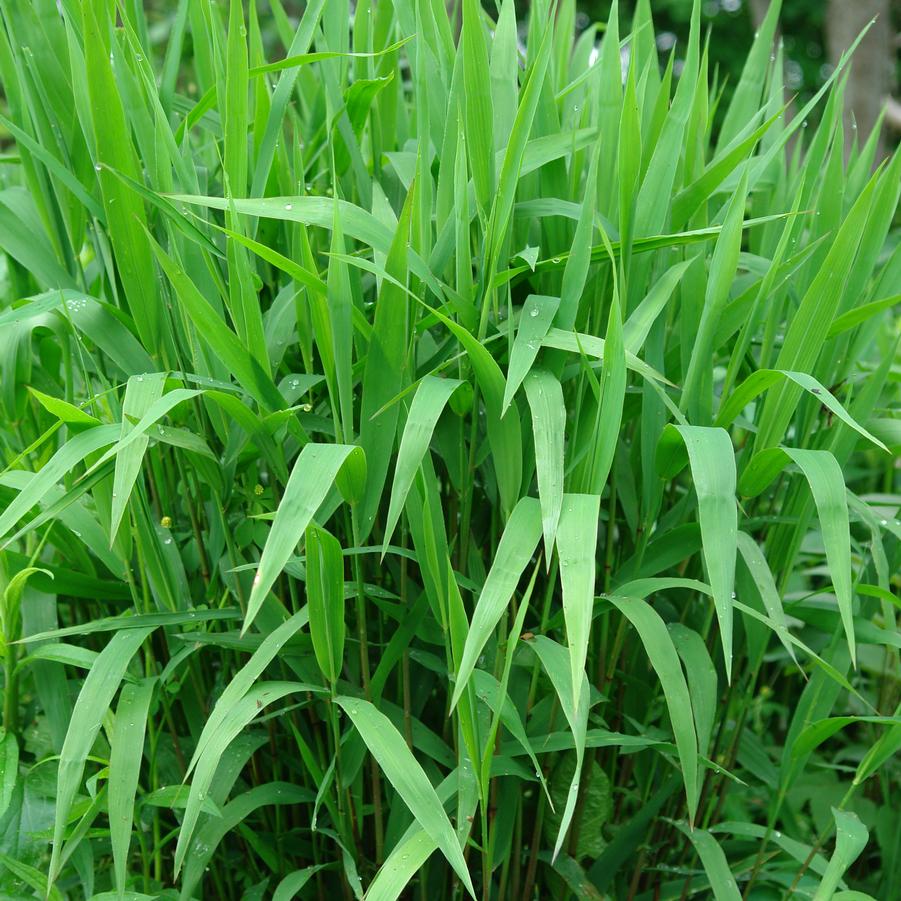
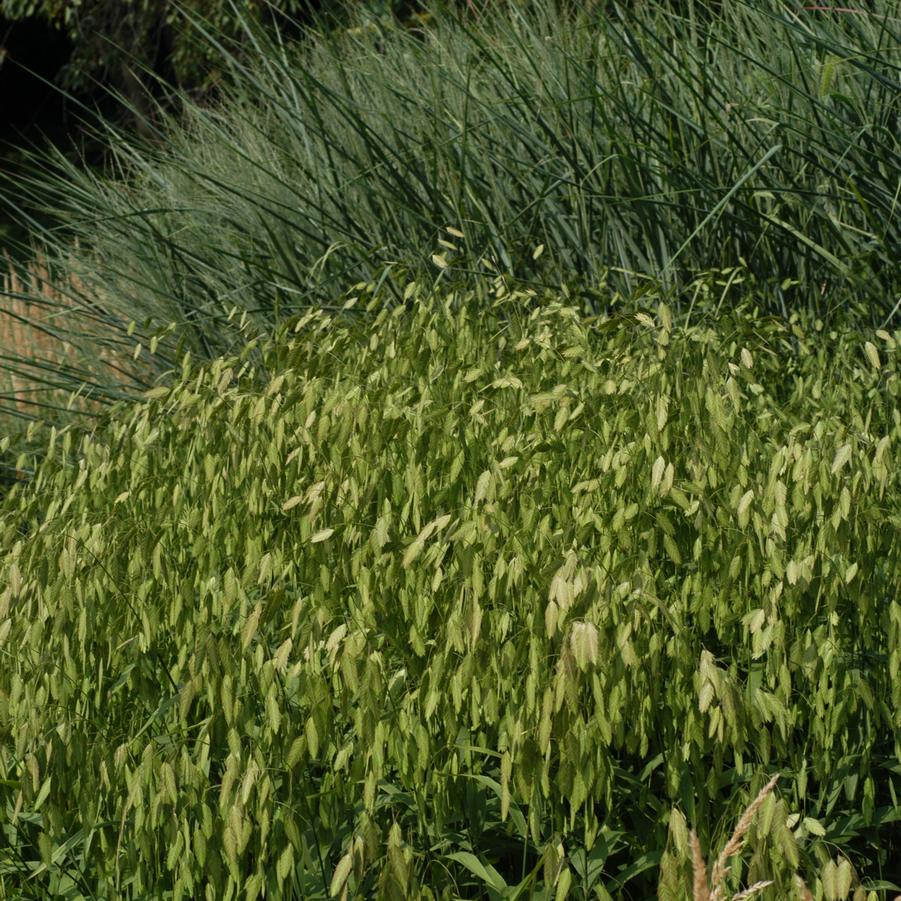
A versatile native grass with bamboo-like foliage and delightful nodding seed heads that rustle in the breeze from late summer to winter. It grows in most sites and is a quite vigorous groundcover when given consistent moisture and sun. It is better behaved in average garden conditions and in shade. A unique cut flower in fresh or dry arrangements.
Wetland Indicator Status
| • | Falcutative Upland (FACU) |
Propagation Type
| • | Open pollinated |
Grass Type
| • | Warm Season |
Additional Information about Chasmanthium latifolium
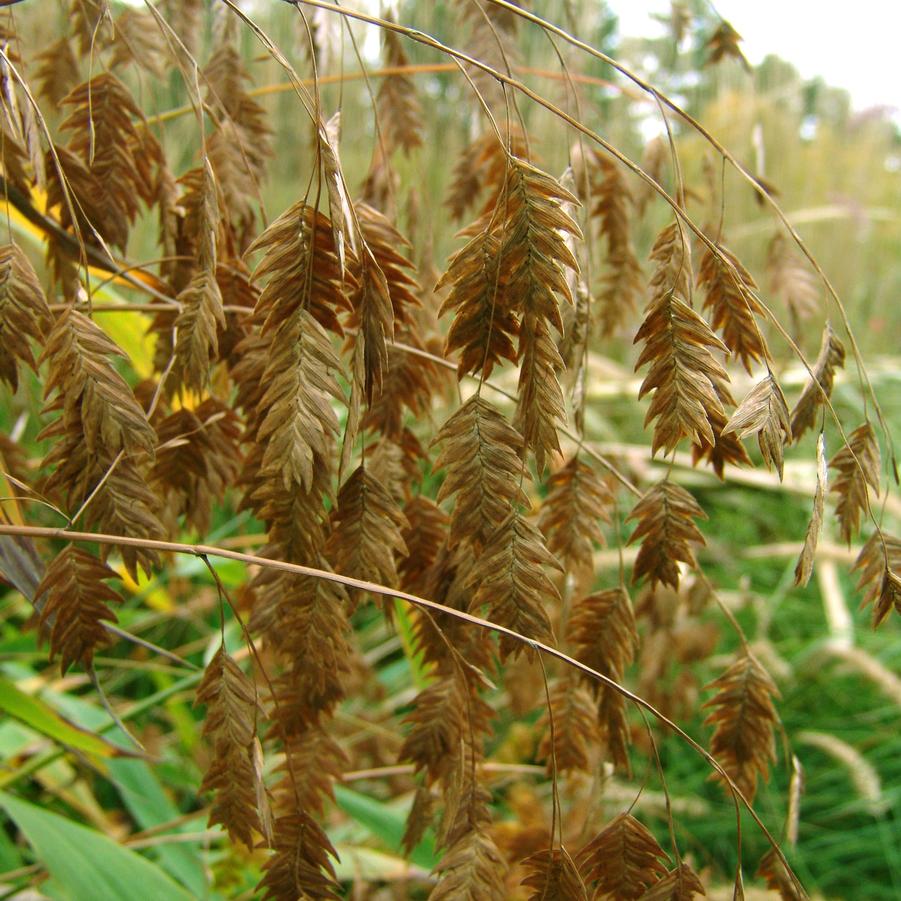
Chasmanthium latifolium is a treat in the garden. A tall, clump-forming, upright ornamental grass, it grows 2’-4’ tall with very distinguished seedheads. The flat seedheads droop, stirring and waving in the breeze, turning a lovely honey brown in the fall as the low warm light hits them. The seedheads keep well for flower arrangements and river oats stay upright through winter providing textural interest and movement in a winter garden.
Endemic to the eastern United States, Northern sea oats most often occurs in rich woods or rocky slopes along streams and on moist bluffs. Adaptable in full sun to shade in moist sites to dry areas in average garden soil to clay to lean—if a garden design has the space for it, Chasmanthium latifolium would be a welcome addition. It prefers areas with moist fertile soils in and in optimum conditions, will self-sow enthusiastically.
Wonderful to plant on banks for erosion control and in wild areas with minimal management, we place Chasmanthium latifolium anywhere that we need a bold stroke of texture and coverage. It is great for suppressing other weeds, has high salt tolerance, and is a host plant for a several species of Roadside Skippers.
Growing & Maintenance Tips for Chasmanthium latifolium
Chasmanthium latifolium is a great choice for stabilization of a stream bank or a shady hill. It is happiest in a moist, partly shady site, but in such a place it will roam rampantly. In a drier location it is kept in check, but still looks lovely. Excellent salt tolerance. Propagate by division and seed.