Plant Calculator
Enter the approximate length and width of the area you will be planting and click 'Calculate' to determine how many Tradescantia ohiensis you will need.
Correct and successful spacing is complex and depends on project conditions. We encourage you to call us at 877-ECO-PLUG for project specific recommendations and further assistance.
Tradescantia ohiensis
spiderwort
- Category: Perennial, Native
- Hardiness Zone: 4-9
- Height: 24-36 Inches
- Spread: 12-18 Inches
- Spacing: 12 Inches
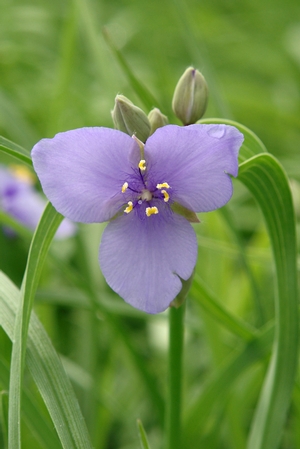
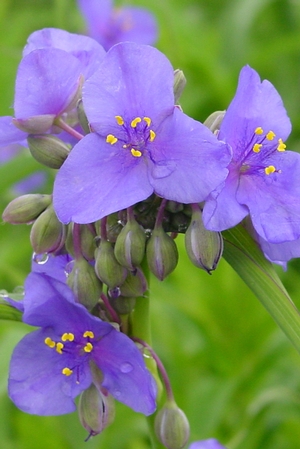
- Bloom Color: Violet
This spiderwort of Pennsylvania provenance is a great landscape plant for hot sunny locations, unlike others in the genus. Attractive bluish-grey foliage with flowers in blue, pink or purple from early June to September. Think of a flowering grass-like, drought-loving native perennial.
Wetland Indicator Status
| • | Falcutative (FAC) |
Plug Type
| • | Landscape Plug™ |
For Animals
| • | Pollinator-friendly |
Season of Interest (Flowering)
| • | Summer |
Propagation Type
| • | Open pollinated |
Additional Information about Tradescantia ohiensis
This spiderwort of Pennsylvania provenance is a great landscape plant for hot sunny locations, unlike other plants in the genus. The attractive bluish-grey foliage sport flowers in blue, pink or purple from early June to September, giving Tradescantia ohiensis a long season of bloom time. Tradescantia ohiensis grows 24-36” tall and 18-30” wide. Spiderwort has similar foliage to daylily and is easiest to think of as a flowering grass-like, drought-loving native perennial.
The native range of Tradescantia ohiensis is from Ontario to Massachussets to Minnesota and south to Florida and east Texas. It grows well in a variety of soils and moisture requirements but prefers moist to dry, well-drained sandy acidic soils in full to partial sun. That being said, spiderwort is commonly found in disturbed areas such as along railroad tracks, and in moist meadows, prairies, and thickets. In areas where the plant is happily situated, it can become quite aggressive and self-sow readily. The plant can be divided when it becomes overcrowded and will grow quite well in part-shade, specifically beneath large deciduous trees, but will offer less bloom. After the initial flush of growth and bloom in early summer, a midseason cut back can tidy up sprawling foliage and reinvigorate the plant for a strong second show in early fall. Spiderwort is quite tolerant of herbicide and sometimes will need a second treatment or physical removal.
Tradescantia ohiensis weaves its way throughout our gardens. It is best used as a border perennial, in open meadows and rock gardens but is adaptable to many situations. The flowers are attractive to long-tongued bees and certain species of flies and the foliage is edible to mammals and several leaf beetles. The plant is rarely bothered by disease and if deer have browsed on it, one could never tell. The plant is very robust.
Growing & Maintenance Tips for Tradescantia ohiensis
Prefers moist to dry, well-drained, sandy, acidic soils in full to partial sun. Propagate by seed, cuttings or division. Deadhead to prolong season and cut foliage back after flowering. Best used as a border perennial, in open meadows and rock gardens.