Plant Calculator
Enter the approximate length and width of the area you will be planting and click 'Calculate' to determine how many Solidago sphacelata 'Golden Fleece' you will need.
Correct and successful spacing is complex and depends on project conditions. We encourage you to call us at 877-ECO-PLUG for project specific recommendations and further assistance.
Solidago sphacelata 'Golden Fleece'
autumn goldenrod

- Category: Perennial, Native
- Breeder: Mt. Cuba Collection™
- Hardiness Zone: 4-9
- Height: 18-24 Inches
- Spread: 24-36 Inches
- Spacing: 18 Inches
- Bloom Color: Yellow
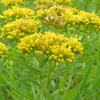
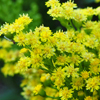
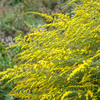
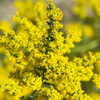
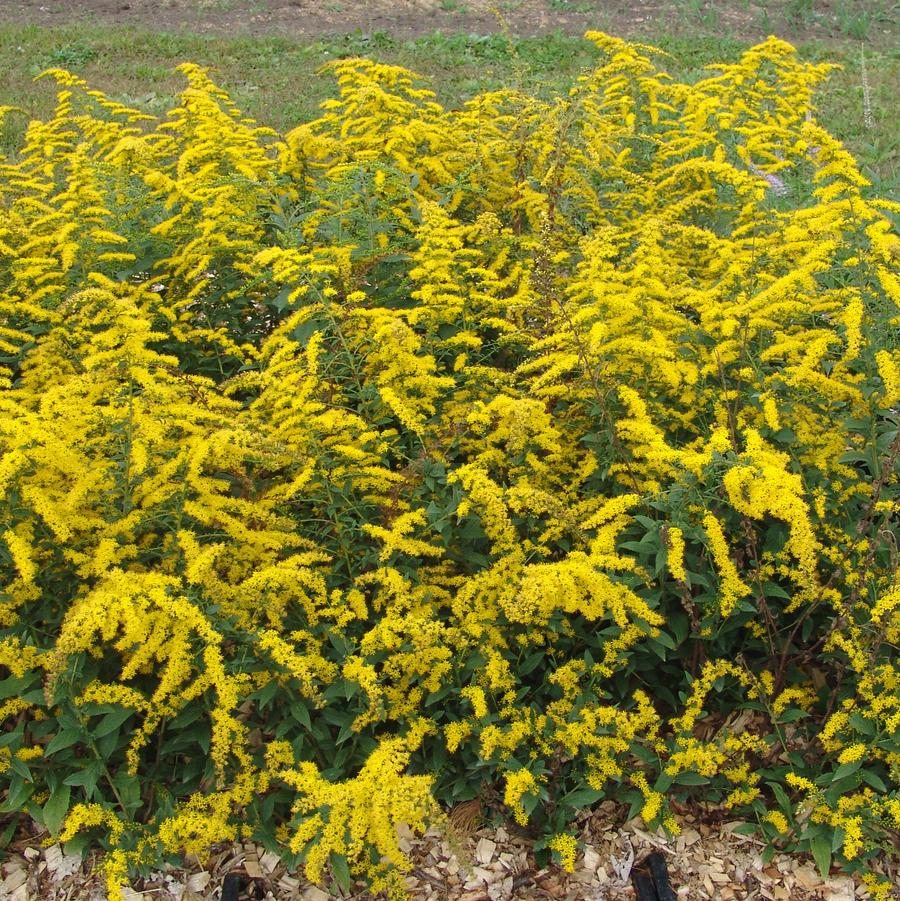
Another fantastic Mt. Cuba introduction. A stunning show of sprays of golden yellow flowers from mid-August through September. Semievergreen heart-shaped leaves. Truly an excellent groundcover and bee and butterfly charmer! Hairstreaks, sulphurs and skippers are particularly attracted to goldenrod. Monarchs visit it during their autumn migration.
Plug Type
| • | Horticultural Plug |
Propagation Type
| • | Vegetative |
Additional Information about Solidago sphacelata 'Golden Fleece'
Introduced by Mt. Cuba in the late 80s, Solidago sphacelata ‘Golden Fleece’ was a chance seedling found in Eden, North Carolina and brought to Dr. Richard Lighty for Mt. Cuba’s evaluation. Displaying a stunning show of sprays of golden yellow flowers from mid-August through September, ‘Golden Fleece’ is a compact goldenrod, growing up to 20” tall and spreading to 36” over five years. The semi-evergreen heart-shaped leaves are blue-green in color and are a truly an excellent unconventional groundcover. Very durable, drought-resistant, and long-lived in the garden, it brings late-season splendor when other perennials begin to fade. When ‘Golden Fleece’ was introduced to Europe, it took their gardens by storm and won the Internationale Stauden-Union’s Award for an outstanding new plant in Switzerland in 1994.
Solidago sphacelata is native to calcareous woodlands and rocky pastures from Virginia to Illinois and south to Kentucky and Georgia. Autumn goldenrod grows best in somewhat fertile, sandy, well-drained soils in full sun. It is tolerant of a wide range of conditions, from part shade and dry soil to moist soil in full sun but performs best in average garden soil. To receive a second show, cut back flowers after blooming to encourage rebloom.
Solidago sphacelata ‘Golden Fleece’ looks well in butterfly and wild gardens or as a groundcover or border perennial. It is a bee and butterfly charmer! Hairstreaks, sulphurs and skippers are particularly attracted to goldenrod. Monarchs visit it during their autumn migration. We love showing ‘Golden Fleece’ as an edging plant in a perennial border – the clean, green foliage smothers weeds in the summer and puts on a lovely display in the fall!
Growing & Maintenance Tips for Solidago sphacelata 'Golden Fleece'
Prefers somewhat fertile, sandy, well-drained soils in full sun. Propagate by seed or division every 3-4 years. Cut back to encourage rebloom. Used in butterfly and wild gardens or as a groundcover or border perennial.