
Plant Calculator
Enter the approximate length and width of the area you will be planting and click 'Calculate' to determine how many Salvia nemorosa 'May Night' you will need.
Correct and successful spacing is complex and depends on project conditions. We encourage you to call us at 877-ECO-PLUG for project specific recommendations and further assistance.
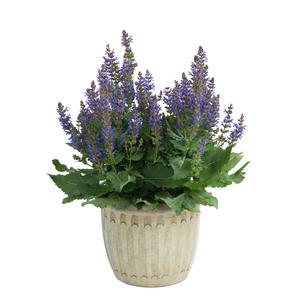
Salvia nemorosa 'May Night'
garden sage
- Category: Perennial
- Hardiness Zone: 4-9
- Height: 18-24 Inches
- Spread: 12-18 Inches
- Spacing: 12-18 Inches
- Bloom Color: Violet
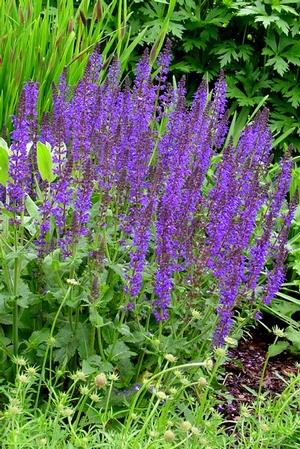
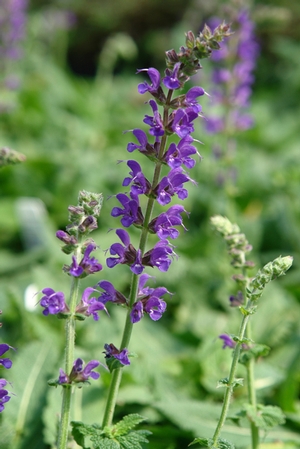
One of the most commonly used salvias in the northeastern US, it is covered in striking dark violet-blue flower spikes in May and June and remains upright and tidy throughout the season. Attracts birds, butterflies and bees. Makes an excellent cut flower, fresh or dried, and its leaves are freshly aromatic. An overall low maintenance selection. Combine with brilliant yellows and whites for a bold display in the garden.
Click here to download technical information for growers:

Exposure
| • | Full Sun |
Plug Type
| • | Horticultural Plug |
Season of Interest (Flowering)
| • | Summer |
Propagation Type
| • | Vegetative |
Additional Information about Salvia nemorosa 'May Night'
The Perennial Plant Association's 1997 Perennial Plant of the Year®
The genus Salvia is a large one, containing over 700 species of both annual and perennial plants. Some members of this genus are commonly called "sages", both ornamental species and the many culinary salvias. Salvias are a member of the Mint family and share the families' characteristics of square stems; simple, oval or lance-shaped leaves with toothed margins and whorls of flowers produced on spikes.
Many gardeners are familiar with the annual bedding plant salvia or the culinary salvia, but it is definitely worth exploring some of the ornamental perenial species too. All salvias grow best in well drained, evenly moist soil with full sun.
Salvia nemorosa has many beautiful cultivars. 'May Night' salvia was selected the Perennial Plant of the Year for 1997. It has a long blooming period with vibrant blue flowers, grows up to 18 inches tall and has a compact growth habit. The striking violet-blue flowers are very attractive when set against a light colored background or when mixed with white, yellow or orange flowers. 'May Night' is a hybrid salvia and will not come true from seed, but can be propagated from division or cuttings. It is hardy to Zone 4. - University of Nebraska–Lincoln Extension
Salvia comes from the Latin salvere, meaning to heal or save.
The leaves are aromatic when crushed.
Growing & Maintenance Tips for Salvia nemorosa 'May Night'
Prefers average, clay or sandy, well-drained soils in full sun. Drought, heat and humidity tolerant. Shear after blooming to prompt fresh foliage and flowers. May need winter protection. May be used as a perennial border, rock gardens or in mass plantings.