Plant Calculator
Enter the approximate length and width of the area you will be planting and click 'Calculate' to determine how many Physostegia virginiana 'Miss Manners' you will need.
Correct and successful spacing is complex and depends on project conditions. We encourage you to call us at 877-ECO-PLUG for project specific recommendations and further assistance.
Physostegia virginiana 'Miss Manners'
obedient plant
- Category: Perennial, Native
- Hardiness Zone: 3-9
- Height: 18-24 Inches
- Spread: 12 Inches
- Spacing: 12 Inches
- Bloom Color: White
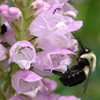
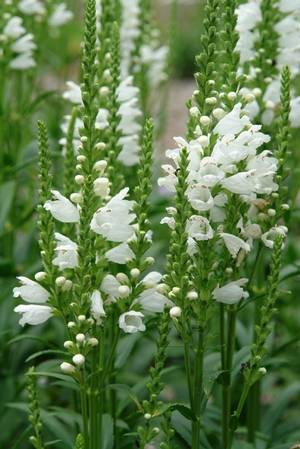
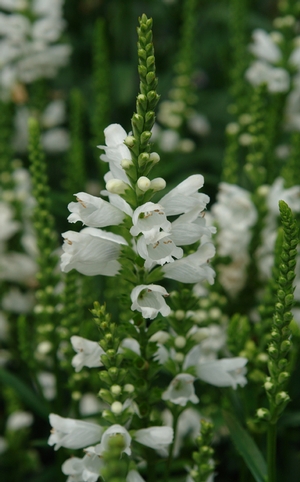
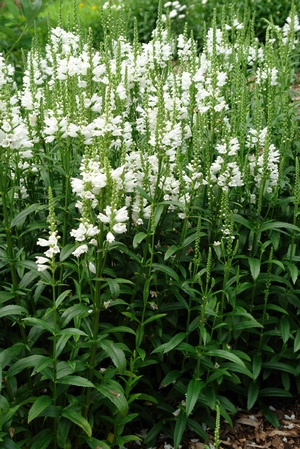
This plant was selected by Darrell Probst of Garden Visions in Hubbardston, MA. 'Miss Manners' is notable for its well-behaved, non spreading habit. It is a compact, clumping form, with excellent secondary branching and good rebloom. Pure white snapdragon-like flowers from June to September over deep green, glossy foliage. A nice late season addition to the garden for bees and hummingbirds.
Exposure
| • | Full Sun |
Wetland Indicator Status
| • | Falcutative (FAC) |
Plug Type
| • | Landscape Plug™ |
Propagation Type
| • | Vegetative |
Additional Information about Physostegia virginiana 'Miss Manners'
Physostegia virginiana ‘Miss Manners’ was selected by Darrell Probst of Garden Visions in Hubbardston, MA. 'Miss Manners' is notable for its well-behaved, non-spreading habit. It has a compact, clumping form topping out at 30” and excellent secondary branching with good rebloom. The flowers are pure, white, and snapdragon-like with long-season bloom from June to September over deep green, glossy foliage. Like other plants in the mint family, ‘Miss Manners’ is a great late-season addition to the garden for bees and hummingbirds.
Physostegia virginiana is found from Quebec to Montana to New Mexico to Florida, preferring open meadows, prairies, stream banks, and moist disturbed areas. It grows in full sun to part shade in average garden soil to wet conditions. In the Lamiaceae family, obedient plant grows rhizomatously. Rarely does it get disease but occasionally can be affected by rust or spider mites. The common name, obedient plant, comes from the plant’s ability for each individual flower to be positioned in any one direction and temporarily remain in that position as if it were hinged. While the plant is a heavy feeder, too rich of soil causes the plant to lodge. ‘Miss Manners’, however, was selected for its ability to stay upright in rich conditions.
Our Physostegia virginiana ‘Miss Manners’ is at the mouth of our three-tiered forebay system to handle greenhouse rain runoff. It handles heavy soil and periodic inundation well;in the wild, obedient plant is frequently found in swamp conditions. Obedient plant supports bumblebees, butterflies, and long-tongued bees.
Growing & Maintenance Tips for Physostegia virginiana 'Miss Manners'
Obedient plants are heavy feeders, but do not over fertilize or lodging may occur. May be propagated by seed or cuttings. Divide every 2-3 years. Cut back after flowering to reduce height and spread. Excellent for naturalized, border or perennial gardens.