Plant Calculator
Enter the approximate length and width of the area you will be planting and click 'Calculate' to determine how many Iris versicolor you will need.
Correct and successful spacing is complex and depends on project conditions. We encourage you to call us at 877-ECO-PLUG for project specific recommendations and further assistance.
Iris versicolor
blueflag
- Category: Perennial, Native
- Hardiness Zone: 3-9
- Height: 2-3 Feet
- Spread: 2-3 Feet
- Spacing: 18-24 Inches
- Bloom Color: Violet
- Foliage Color: Blue
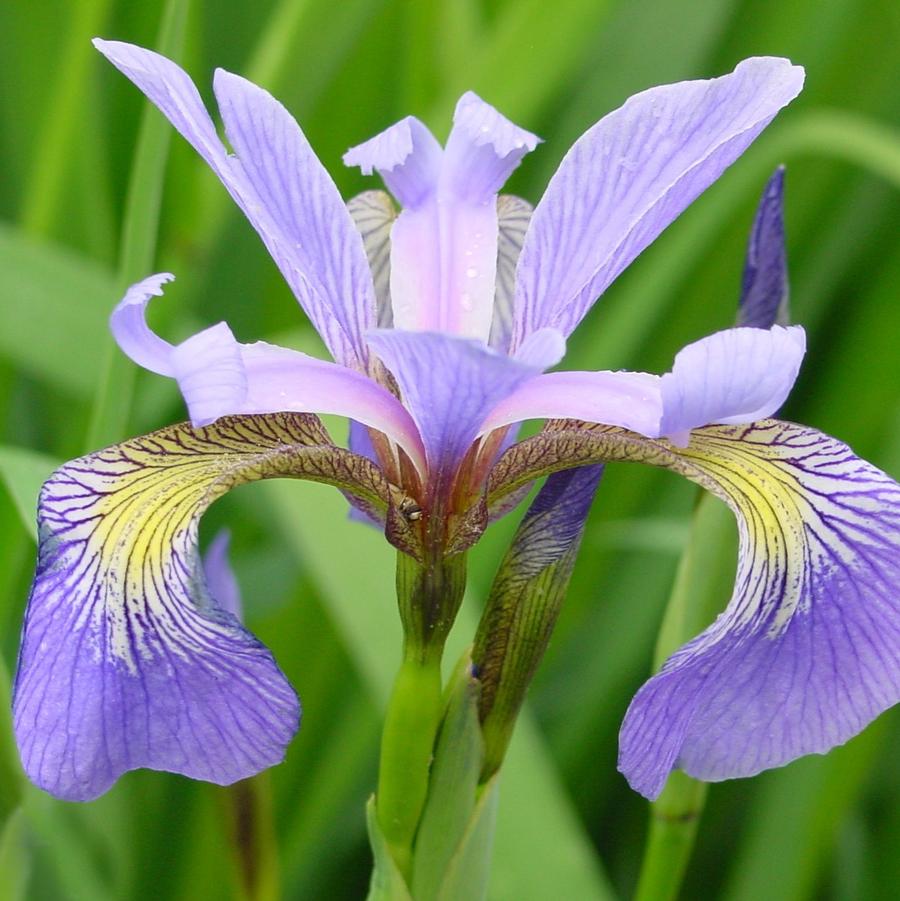
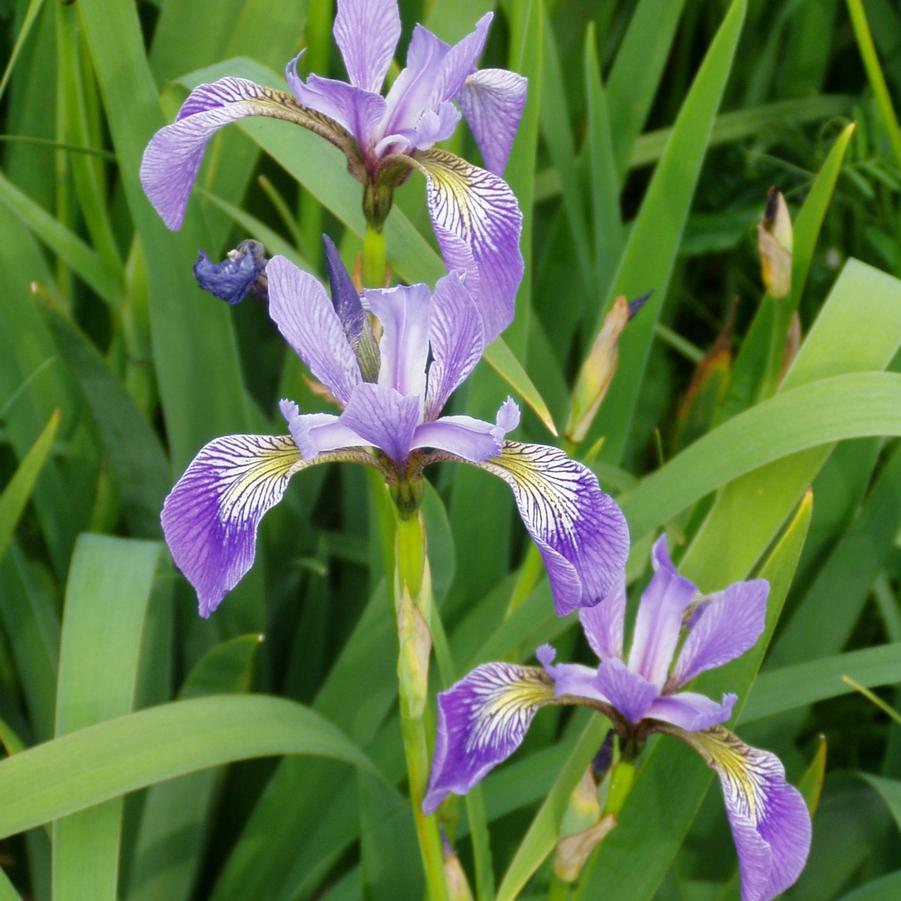
Very robust, dramatic display of boldly veined, swordlike leaves with large, violet-blue flowers accented by whitish markings at the base of the sepals. Petals and sepals spread out flat making it an attractive place for feeding by hummingbirds.
Wetland Indicator Status
| • | Obligate Wetland (OBL) |
Plug Type
| • | Landscape Plug™ |
For Animals
| • | Caution: Toxic |
| • | Deer Resistant |
| • | Hummingbird-friendly |
| • | Pollinator-friendly |
| • | Songbird-friendly |
Season of Interest (Flowering)
| • | Late Spring / Early Summer |
Propagation Type
| • | Open pollinated |
Additional Information about Iris versicolor
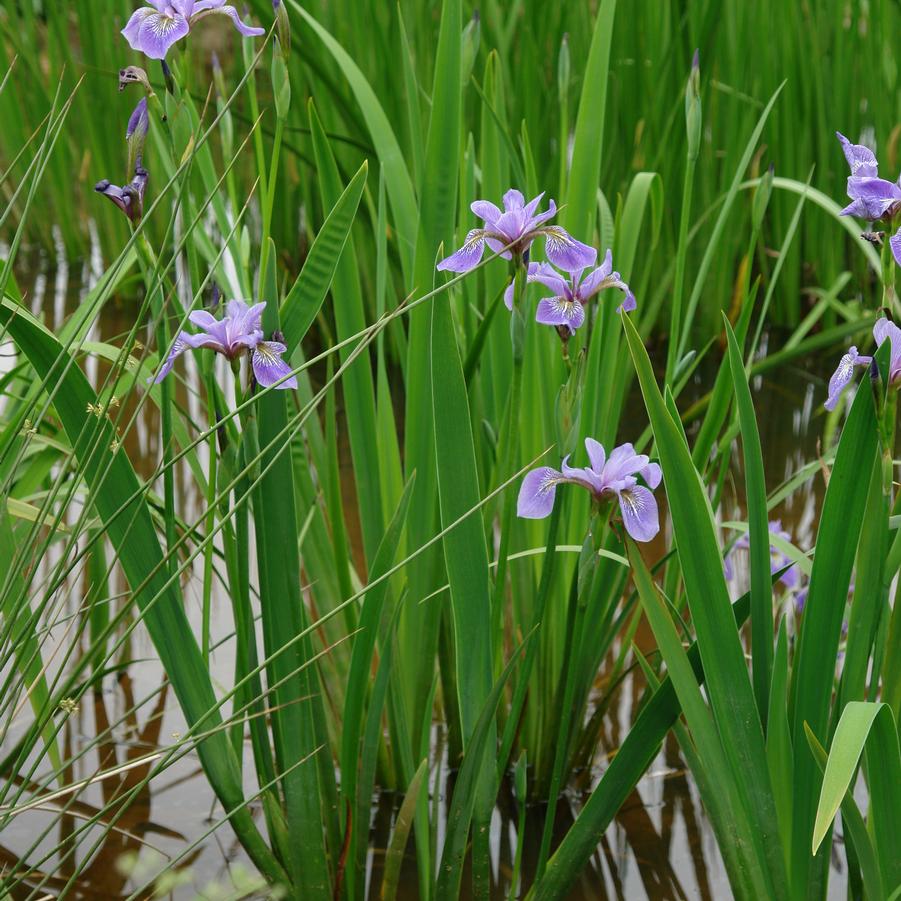
Perfectly at home along a streambank or the edge of a pond, Iris versicolor grows in clumps 1’-3’ tall and 2’ wide. The flowers bloom in early summer from deep violet to white with yellow blotches on the throat. The petals and sepals spread to form an easy feeding vessel for hummingbirds. When the blooms of summer fade, the upright, sword-like foliage provides textural contrast to the garden plants surrounding it. A durable choice, Iris versicolor is perfect for adding a bit of lushness around a water feature or placing in a situation of moist sun where the soil is too wet and heavy for other perennials.
The native range for blueflag runs from Newfoundland to Manitoba, south to Florida and Arkansas and it can be found in marshes, swamps, wet meadows, shorelines, and in forested wetlands. Iris versicolor prefers rich soils in full sun to part shade and tolerates moderately brackish water and permanent inundation up to 6 inches deep.
While the flower has some beetle and bird visitors, blueflag’s roots are a preferred carbohydrate source for aquatic rodents. It is a plant best grouped together en masse where the dotting of its blue flowers can create a rhythm as it peaks through the strong foliage. Over time, Iris versicolor spreads by rhizome or by seed if placed in a happy location.
Growing & Maintenance Tips for Iris versicolor
Prefers rich, well-drained, loamy, peaty soils in full to partial shade. Benefits from the addition of lime and rich, organic materials. Best used in flower and water gardens, edges of ponds, and areas in which it may naturalize.