Plant Calculator
Enter the approximate length and width of the area you will be planting and click 'Calculate' to determine how many Aster novae-angliae you will need.
Correct and successful spacing is complex and depends on project conditions. We encourage you to call us at 877-ECO-PLUG for project specific recommendations and further assistance.
Aster novae-angliae
New England aster
- Category: Perennial, Native
- Hardiness Zone: 3-8
- Height: 4-6 Feet
- Spread: 2-3 Feet
- Spacing: 12-18 Inches
- Bloom Color: Pink
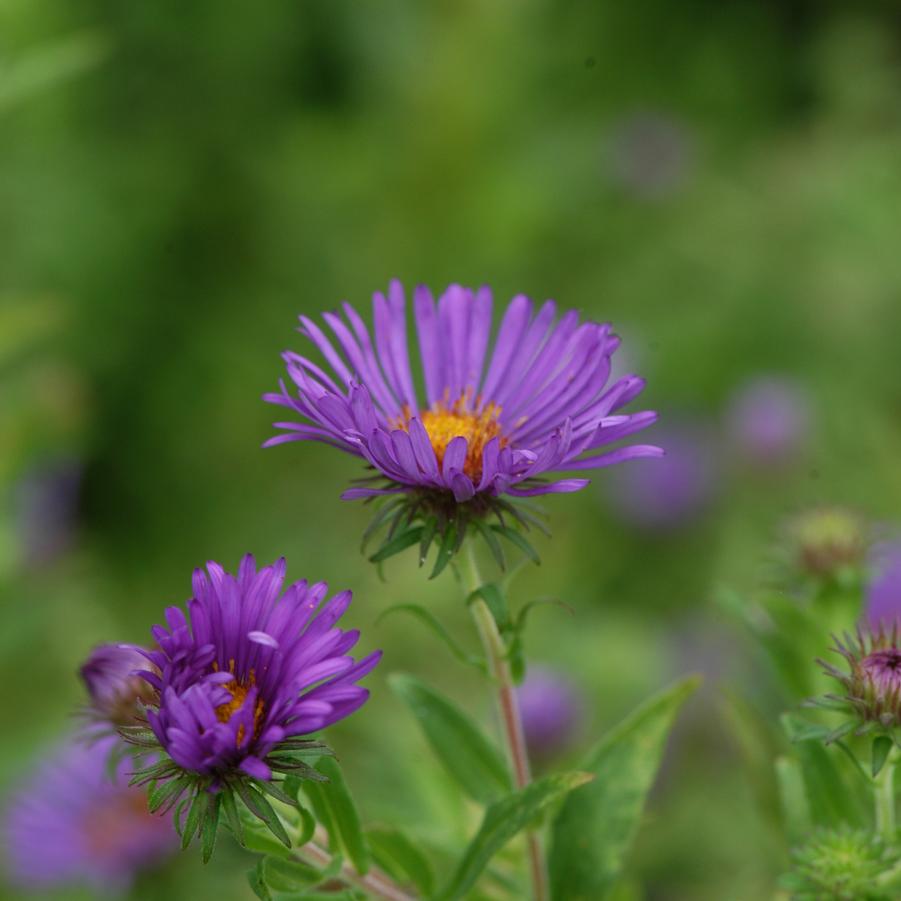
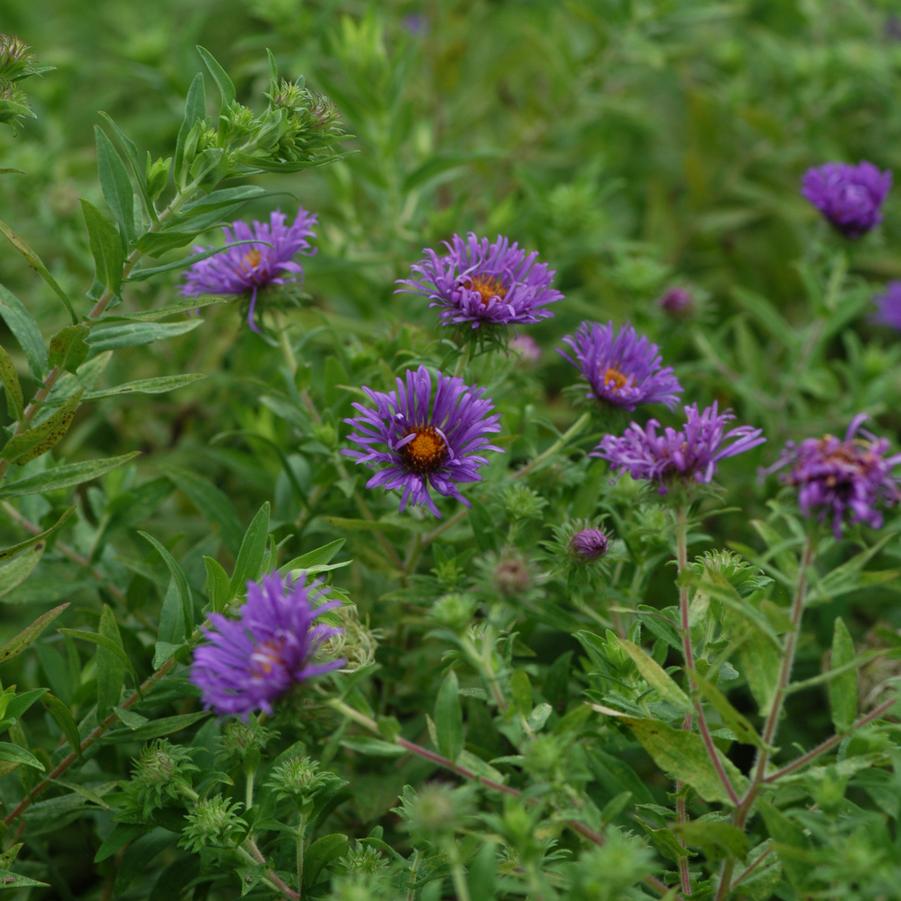
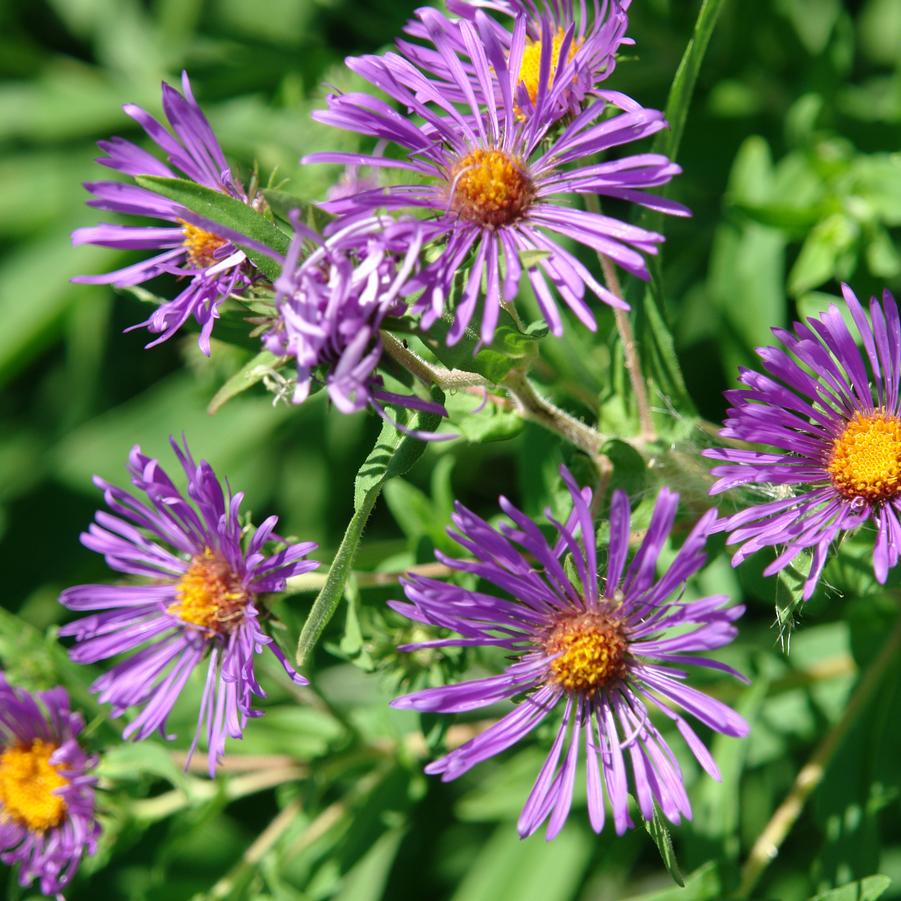
Blooms ranging from blue-purple to lavender-pink pop in the late summer and fall landscape. A large, showy native aster that is a must-have autumn nectar source for pollinators.
Wetland Indicator Status
| • | Falcutative Wetland (FACW) |
Plug Type
| • | Landscape Plug™ |
Propagation Type
| • | Open pollinated |
Additional Information about Aster novae-angliae
Aster novae-angliae, now Symphyotrichum novae-angliae, is a native that grows 3-6’ tall with 4-5” leaves are very hairy. It is a large, showy aster covered in 1 1/2” blooms with golden centers in colors that range from blue-purple to lavender-pink. The New England aster is a must-have autumn nectar source for pollinators, including Monarchs as they stock up for their travels to Mexico.
Originally occurring in moist prairies, meadows, thickets, low valleys and stream banks throughout the eastern United States, New England aster grows in full sun in average to moist soil. It can tolerate a variety of conditions and soil types.
Aster species are a staple in plantings with the intention of erosion control and pollinator habitat. They are populated in our meadows, bioswales, and constructed wetlands, bringing late season color and pollinator nectar sources in our natural areas.
Growing & Maintenance Tips for Aster novae-angliae
This plant thrives in a variety of soil conditions, making it well-suited for small sites and home gardens or landscapes. To manage unwanted seedlings, it is best to remove the seed heads before they fully ripen rather than resorting to weeding. If height becomes a concern, cutting back the main stem by half in midsummer encourages a bushier growth habit, reducing the need for staking.