
Plant Calculator
Enter the approximate length and width of the area you will be planting and click 'Calculate' to determine how many Asclepias verticillata you will need.
Correct and successful spacing is complex and depends on project conditions. We encourage you to call us at 877-ECO-PLUG for project specific recommendations and further assistance.
Asclepias verticillata
horsetail milkweed, whorled milkweed
- Category: Perennial, Native
- Hardiness Zone: 4-8
- Height: 1-3 Feet
- Spread: 1-2 Feet
- Spacing: 12 Inches
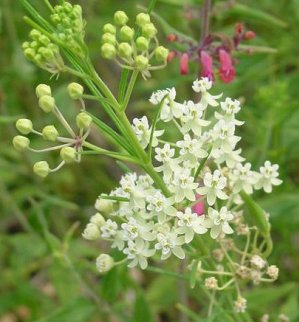
- Bloom Color: White
A widely adaptable and tough native that is a deer-resistant food for larval butterflies. The fine-textured foliage provides a dark green backdrop for the clusters of white flowers that appear in June and July.
Click here to download technical information for growers:

Wetland Indicator Status
| • | Falcutative Upland (FACU) |
Plug Type
| • | Landscape Plug™ |
Season of Interest (Flowering)
| • | Summer |
Propagation Type
| • | Open pollinated |
Additional Information about Asclepias verticillata
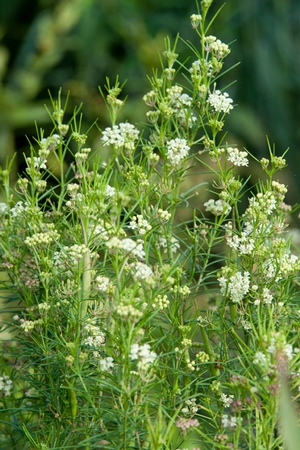
Asclepias verticillata is a widely adaptable and tough native perennial with fragrant white flowers that bloom later in the summer, notably later than many other Asclepias species. Its smooth, narrow, needle-like whorled foliage superficially resembles field horsetail (Equisetum arvense).
This pioneer species often establishes in disturbed areas in prairies, meadows, roadsides and shale barrens east of the Rocky Mountains. It is best located in a sunny dry spot but will tolerate average to moist garden soil as well.
In our trials, Asclepias verticillata thrives in one of our xeric meadows where it receives no irrigation and blazing southern sun exposure.
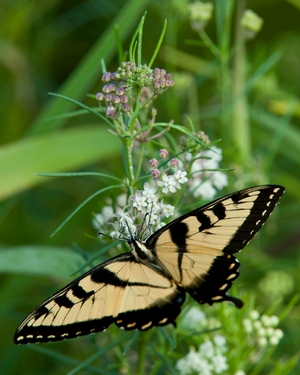
Like other milkweed species, it is the food source for larval Monarch butterflies. A vast array of other insects feed on the foliage, flowers, seeds and other plant parts. This species is toxic to mammals so it is a great plant to consider for sites with deer pressure. Please note, Asclepias verticillata is highly toxic to livestock and horses - it should not be allowed to take root in pastures or hayfields.
Growing & Maintenance Tips for Asclepias verticillata
Found in dry fields, roadsides and shale barrens - you can see that it needs no coddling. Best located in a sunny dry spot, but will tolerate average to moist garden soil as well.